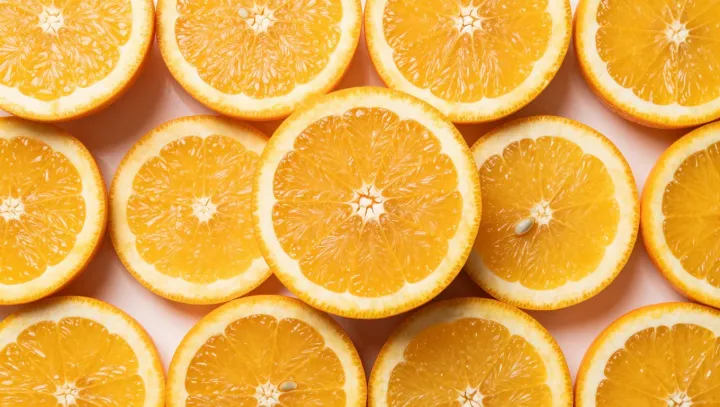
The glass tells only half the orange's story. Its juice carries vitamin C, but the flesh and the white pith also contain the nutrient, along with fiber that a juicer often leaves behind. What looks like waste is part of the fruit's nutritional architecture, not merely packing material.
Squeezing is an imperfect bargain. Juice flows through a strainer, while much of the pulp, membranes and pith remain trapped because their fibrous structures do not readily pass through. Among their components are cellulose and pectin, forms of dietary fiber that contribute to the texture of the whole fruit. Some soluble fiber can enter the juice, particularly when pulp is retained, but a strained glass generally provides less fiber than the orange it came from. The distinction matters: fiber supports digestion and can help slow the absorption of sugars. Juice delivers those sugars in a form that is easier to consume quickly.
Air is a quieter thief. Vitamin C, also known as ascorbic acid, can undergo oxidation when juice is exposed to oxygen; heat, light and storage conditions can also influence how much is lost. The nutrient does not vanish as soon as an orange is squeezed, and the rate of loss varies with the conditions. Keeping juice covered and refrigerated can help preserve it, though it cannot restore fiber left in the press. On the counter, a glass glows beside the discarded pith: two remnants of the same fruit, each holding something the other has surrendered.