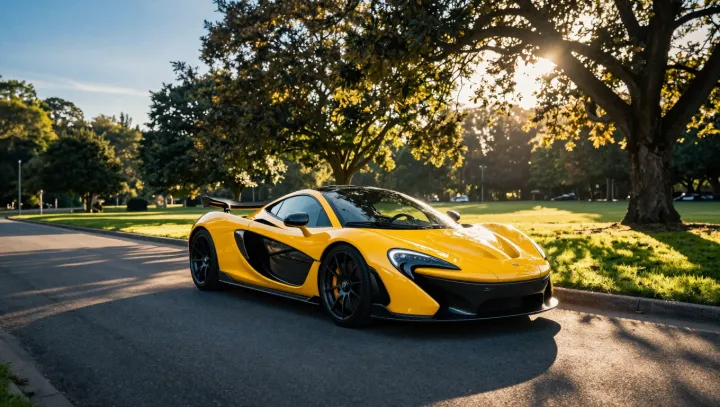
The Huracan STO sacrifices speed to find it elsewhere. Against Dubai's skyline, the Lamborghini wears a large rear wing and sculpted bodywork that create downforce, pressing the car toward the road as air rushes past. The same aerodynamic choices add drag, making outright speed harder to achieve.
That trade looks wiser in a corner than on a specification sheet. Downforce increases the normal force between each tire and the pavement, allowing the tires to generate more lateral force before they slide. Speed feeds the effect: aerodynamic force rises approximately with the square of airspeed, so the extra grip becomes more pronounced as the car travels faster. The physics has limits. Tires do not convert every additional pound of load into a proportional gain in grip, and a wing cannot repeal the consequences of poor traction or excessive speed.
The wing is only part of the bargain. The STO borrows from racing practice with carefully managed airflow around its body, while its naturally aspirated engine delivers power without a turbocharger. More drag means the engine must work harder to push through the air, leaving less power available to increase speed at the top of the range. On public roads, traffic, speed limits and changing surfaces leave little room to explore those aerodynamic gains; a circuit is the appropriate place for that. Beneath the towers, the wing holds a quiet contradiction: a machine shaped to go faster by resisting the air.