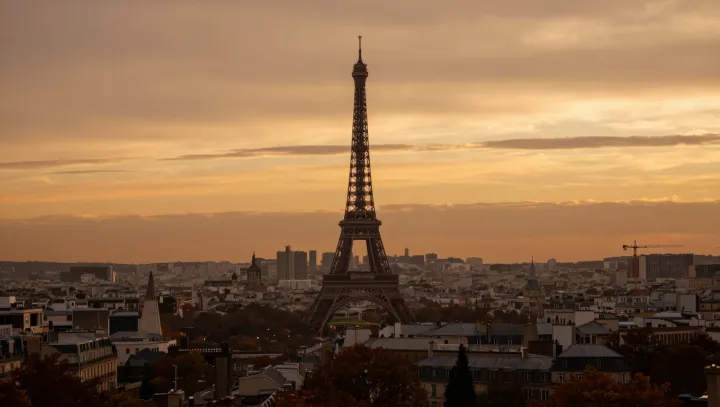
The Eiffel Tower leans away from the sun, not because its foundations shift, but because its iron responds to heat. Against a golden Paris sky, the movement is too slight to notice without instruments. Yet the structure's apparent stillness conceals a daily negotiation between sunlight and metal.
The mechanism is deceptively simple. Thermal expansion makes iron lengthen as its temperature rises: sunlight warms the exposed side more than the shaded side, so the two sides do not expand equally. Because they are joined within the same structure, that difference in length produces a bend toward the cooler side. The tower does not lean away from light itself; it responds to a temperature gradient. As the distribution of heat changes, so does the direction and extent of the movement.
This flexibility is a feature of iron, not evidence that the tower is failing. Its lattice distributes forces through a network of members, while the metal contracts again as it cools. Wind also moves the structure, so not every measured displacement can be attributed to the sun. Engineers distinguish those effects by considering temperature, wind and the pattern of movement together. The lesson extends well beyond Paris: bridges and other iron structures must accommodate expansion and contraction rather than pretend they will not occur. At sunset, the silhouette seems fixed; the metal beneath it is still answering the day's warmth.