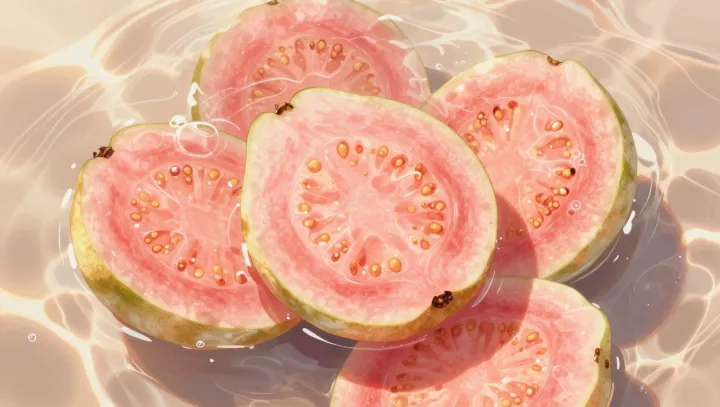
A fig is not quite the fruit it appears to be: its soft interior is a chamber lined with hundreds of tiny flowers. Cut one open and the apparent seeds sit among the remains of that hidden bloom. The arrangement has a name, syconium, and a consequence: pollination requires a visitor willing to enter.
The arrangement is a bargain with a cost. In many fig species, a female fig wasp carrying pollen squeezes through a narrow opening called the ostiole. Inside, she pollinates flowers and lays eggs in some of them; her offspring develop there, while other flowers produce seeds. The wasp often loses her wings on entry and dies inside. Emerging females collect pollen before leaving to seek receptive figs. The trade is not perfectly equal: some flowers feed the wasp's young rather than producing seeds.
The popular tale that every fig contains a wasp is too neat. Some cultivated figs develop without pollination, a process called parthenocarpy, and many edible varieties need no wasp visit to yield a crop. In pollinated figs where a wasp dies, enzymes break down her body; the crunchy bits are principally the small seed-bearing fruits, not wasp remains. Yet the slice still bears the shape of an unusual intimacy: flowers turned inward, waiting in the dark.