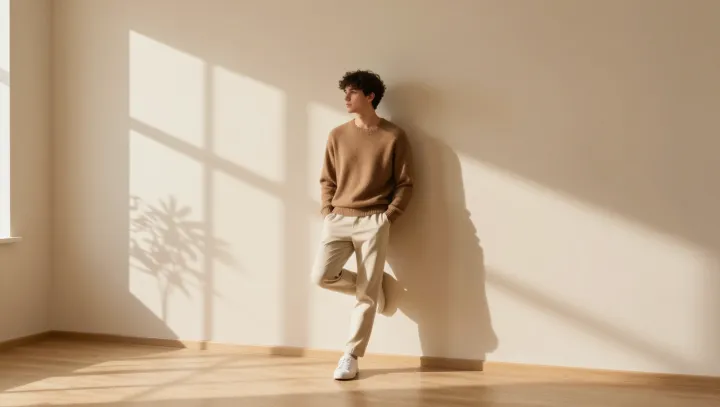
The shorter sneaker often wins the height game. Not the built-up oxford, not the stacked loafer. A low, clean sneaker can make a body read taller because style optics beat raw centimeters in most casual settings.
The key mistake is assuming the eye measures vertical distance; it does not. It tracks uninterrupted lines, high contrast zones, and where shapes abruptly stop. A bulky dress shoe with a thick sole, shiny cap, and sharp color contrast creates multiple visual breaks at the ankle and forefoot, so the leg appears to “start” lower and shorter, even if the person is physically taller by a small increment.
By contrast, a minimalist sneaker with a low collar, slim midsole, and matte finish behaves like a quiet frame. It reduces edge contrast, shortens the ankle gap, and lets trouser fabric skim smoothly downward so the perceived inseam lengthens. Perceptual psychology calls this kind of trick the Gestalt principle of continuity, supported by size-contrast bias: a long, uninterrupted column of similar tone reads taller than the same body chopped into high-contrast blocks.
The practical rule is blunt. Clean the breaks, not just add height. Match sneaker value to trouser value, keep the profile low, and avoid thick white sidewalls that slice the silhouette. Do that, and the body often gains more apparent stature from visual continuity than from any hidden lift inside a dressy shoe.