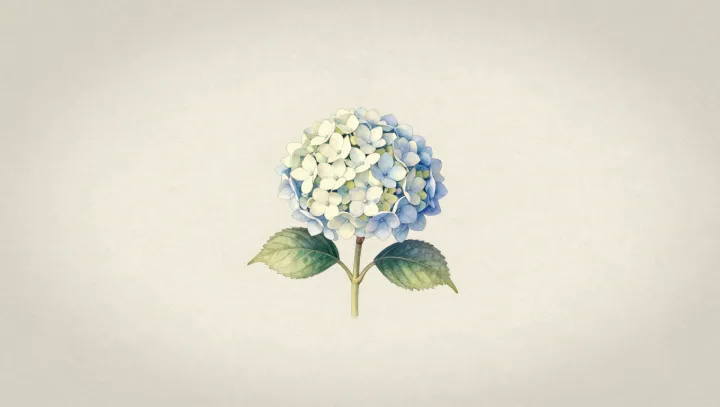
One painted hydrangea often quiets the brain more than any ultra sharp photograph of the same bloom. Color fields flatten. Edges soften. Noise disappears, and with it a hidden tax on neural processing.
The blunt truth is that the photo asks the brain to work harder. Every vein, speck of pollen, and background leaf recruits extra firing in the primary visual cortex and in higher visual areas responsible for figure–ground segregation. A painting that strips away those micro details cuts the volume of incoming spatial frequency data, so the visual system can rely on broader contours and hue gradients rather than constant fine-grain updating.
Calmer still becomes the brain when predictive coding starts to win. Once the hydrangea is stylized, the object is instantly recognized and the brain can lean on top-down expectation instead of bottom-up correction. That reduces prediction error signals in networks linking the visual cortex with the anterior cingulate cortex. Less error, less arousal. The photograph, full of accidental highlights and background clutter, keeps generating tiny mismatches that sustain vigilance.
Most striking is how a painted bloom can reopen the default mode network. With fewer edges and textures to monitor, attention networks loosen their grip, allowing mind wandering, autobiographical memory, and gentle associative thinking. A single wash of blue or violet can act almost like sensory gating, dampening amygdala reactivity tied to threat detection. The flower stays. The surveillance fades.