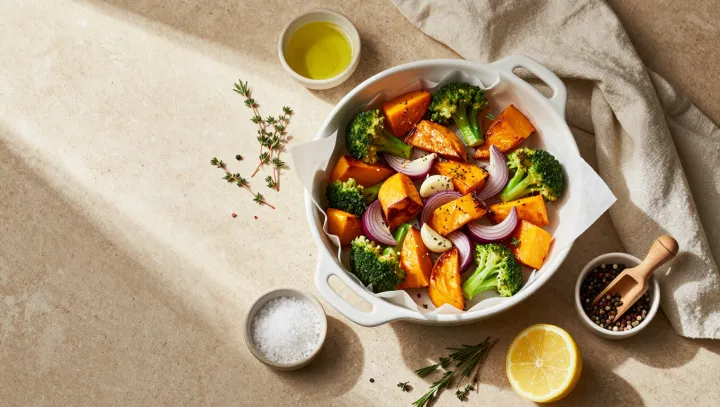
Dry oven heat looks hostile to moisture, yet it is exactly what makes roasted vegetables taste generous and complex. On the tray, hot air strips water from the surface of broccoli florets, sweet potato cubes and onion wedges, shrinking that outer film of moisture so heat can move faster into plant tissues and raise surface temperature beyond the boiling point of water.
The real surprise is that this drying does not ruin texture; it engineers a split personality. Once the surface passes the threshold for the Maillard reaction and for caramelization, natural sugars and amino acids begin to reorganize into hundreds of new flavor molecules, dark pigments and sticky crusts. That browning chemistry proceeds only when water activity falls, so the same dryness that might seem destructive is the gatekeeper for those nutty, toffee-like notes and the browned edges that signal concentrated taste.
Inside, the physics runs on a different clock. Water locked in cell walls and vacuoles heats more slowly, capped near the boiling point, which protects the interior from scorching while pectin softens and starch gelatinization turns sweet potatoes creamy. Broccoli stems and onion layers loosen as structural polysaccharides break down, yet they keep enough water to feel tender instead of soggy. Pull the pan at the narrow window when exterior browning chemistry is advanced but internal moisture and structure remain, and that same dry oven has built contrast rather than collapse.