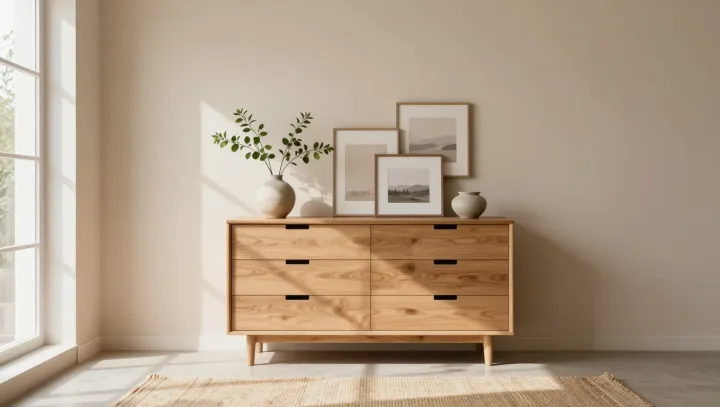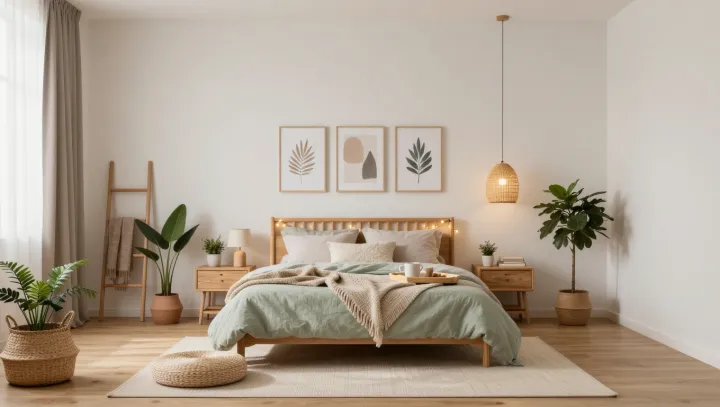
An almost empty bedroom can be more physiologically active than a crowded one. Smooth walls, a single linen curtain, and a wool rug create a low-stimulus field that pushes the autonomic nervous system away from hypervigilance. Studies on sensory load show that reduced visual clutter lowers cortisol and stabilizes heart rate variability, even when people report noticing almost nothing in the room.
Minimalism works only when it is warm to the senses, not when it feels like a clinic. That is where layered texture does the hidden work: matte paint reduces specular reflection, natural fibers modulate microclimate and skin contact, and a wooden headboard introduces subtle visual fractals linked in research on biophilic design to lower amygdala activity. The space looks bare, yet every surface carries a quiet sensory assignment.
The most powerful cues are often ambient and almost invisible. Tuned, indirect lighting supports circadian rhythm by mimicking the spectral shift of late daylight, while heavy textiles and soft finishes dampen high-frequency noise that keeps the sympathetic system primed. What the eye reads as emptiness is, under the skin, a carefully edited set of signals that tell the body it is finally safe enough to stand down.