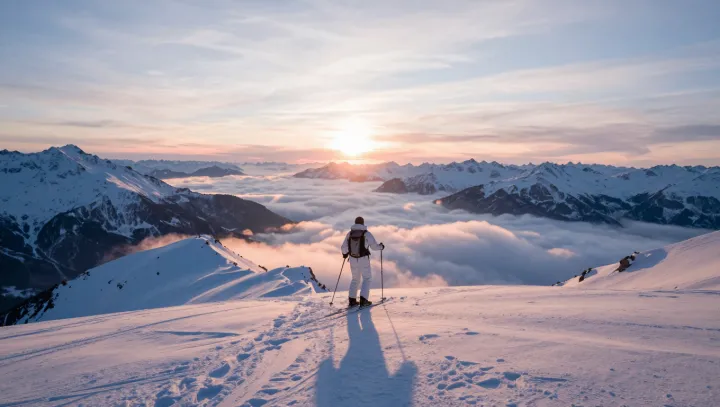
Bare rock under a screaming wind can be the safest place on the mountain. The risk does not sit at the top. It hides where gravity and snowpack mechanics quietly cooperate.
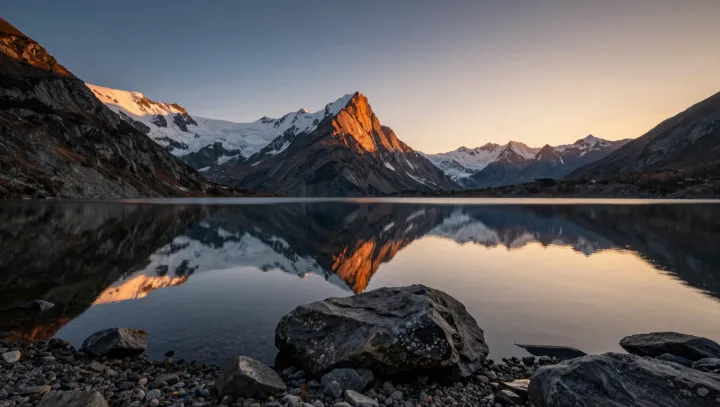
Counter to instinct, the very summit often lacks the main ingredient for a dangerous avalanche: a cohesive slab anchored to a weak layer. Wind transport strips crest lines, sublimation thins whatever stays, and scouring exposes ice or rock. Without a continuous slab, shear failure cannot propagate, so the classic dry slab avalanche never really gets to start on that exposed crown of the ridge.
Down in the valley, the hazard compounds. Wind‑loaded lee slopes collect dense slabs over faceted crystals or depth hoar, a textbook weak layer with poor bonding and low shear strength. Those slopes funnel into gullies and bowls that act as terrain traps, increasing burial depth and trauma risk even from a modest slide. Energy that could have dispersed across open ridges is instead concentrated, channelled, amplified by every concave turn of the valley floor.
So the summit, stripped and hostile, can function as a safety buffer, while the inviting powder below becomes the real problem, hiding structural failure in every loaded pocket of snow.