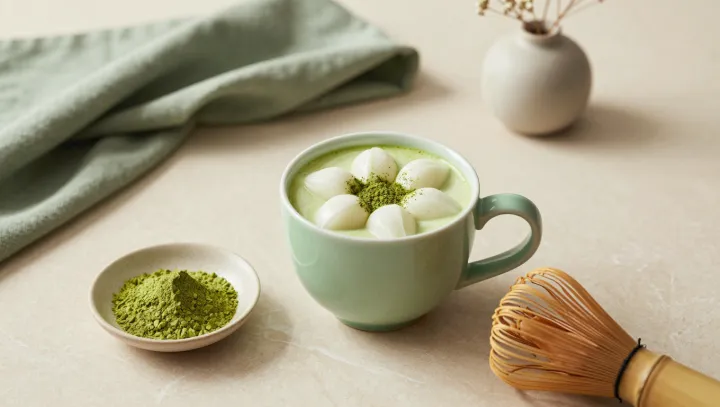
Steam rising from a cup of creamy matcha can be more than comfort; it can become conditioning. The same color, aroma, and chewy mochi bite, repeated at the same point in your morning, start to form a stable cue in the brain’s habit circuitry, linking this small scene to a predictable internal state.
The bold claim is this: calm can be trained as reliably as stress. With repetition, sensory signals from taste and texture converge in the hippocampus and prefrontal cortex, while the basal ganglia encode the routine of stirring, sipping, chewing. Each time the ritual ends in a short, focused work block, dopaminergic neurons mark that sequence as successful, reinforcing synaptic plasticity that ties breakfast to concentration rather than tension.
It is not the drink’s romance that matters, but its consistency. Keep the recipe, mug, and timing almost identical, and you create a kind of behavioral Pavlovian pairing: matcha aroma plus mochi chew equals a shift toward parasympathetic dominance, slower breathing, and task engagement. Skip the phone, keep the context quiet, and the brain receives a clean signal that this combination of flavors is the on-ramp to focused work, not to frantic scrolling.