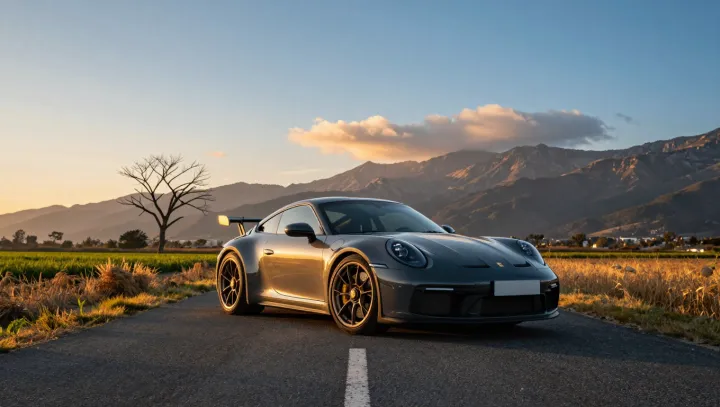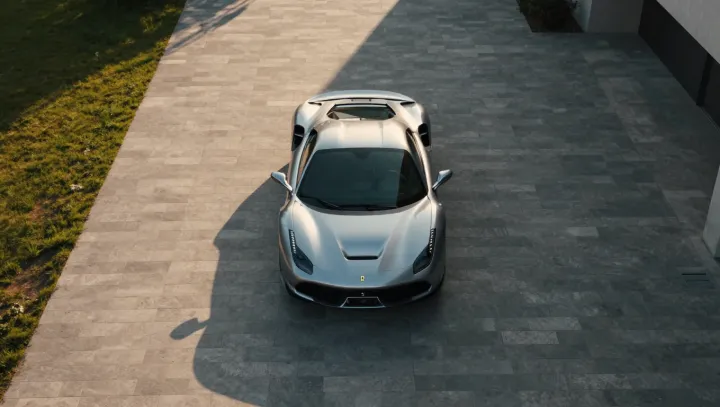
Air is Ferrari’s most loyal mechanic, not its engines. Around a low, silver coupe, the body is sculpted so that air behaves the way it does over a stable airliner wing, only turned upside down to push the car down instead of lifting it skyward.
The bold claim is simple: stability is manufactured by pressure, not by luck or electronics. A shallow nose, vented hood and carefully raked windshield accelerate flow over the roof, invoking the Bernoulli principle to lower static pressure above the cabin while a flat underbody and rear diffuser slow and expand the air beneath, raising pressure there. The resulting pressure gradient acts as continuous downforce, a vertical vector that keeps tires loaded as lateral acceleration builds in a tight corner.
Even more counterintuitive is how Ferrari uses disorder to create control. Tiny edges, fins and slots work as vortex generators, a term borrowed straight from aerospace, rolling the airflow into tight rotating tubes that cling to the bodywork instead of separating into messy turbulence. Coherent vortices feed the rear wing and diffuser with high-energy air, delaying stall and keeping the effective coefficient of lift deeply negative, which on a car means grip. Active flaps and movable spoilers then trim this invisible wing in real time, so the coupe feels less like a toy on tires and more like a low-flying aircraft that chose asphalt over altitude.