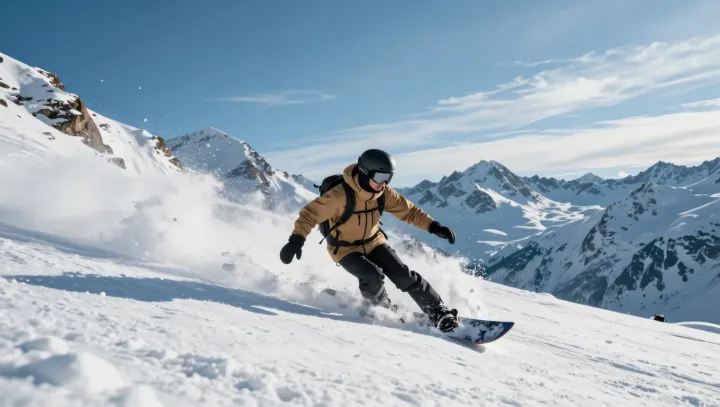
Speed is not liberation. The ski edge bites into packed snow, and the slope seems to pull the eye downhill; yet acceleration contracts awareness until balance, pressure, and direction crowd out every stray thought. There is no spare mind. What feels like freedom from the lift is, at speed, a demanding audit of the body.
That contraction is not failure. Proprioception supplies a running estimate of limb position, while the vestibular system registers acceleration and head movement; together they force the center of mass to stay over a changing base of support. Edge angle becomes a verdict. A small error in pressure distribution can turn controlled carving into a skid, because friction does not bargain with intention. Calculation outruns language.
Velocity's romance is incomplete. Visual flow quickens as speed rises, reaction windows shrink, and a turn becomes less an expression of style than a wager on timing, angular momentum, and grip. Snow accepts no abstraction. The cleanest descent can look serene from below while feeling almost monastic within: attention has not spread across the mountain; it has become a point, bright and unforgiving, beneath the boots.