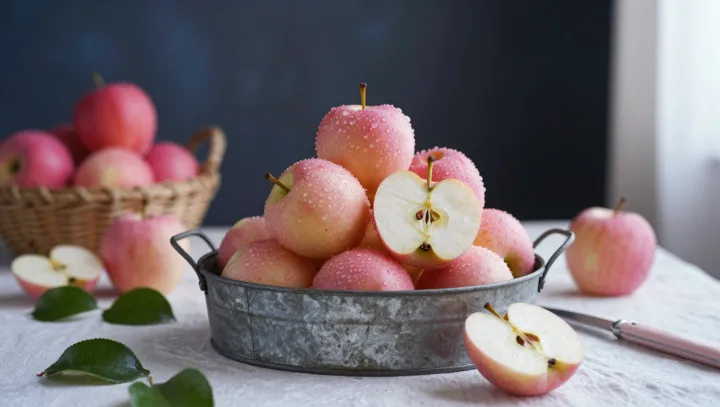
Pressure does the work. Beneath a mottled peel, a freshly picked apple keeps water in cellular chambers, whose walls push back as fluid presses outward, turning an apparently plain fruit into a compact hydraulic device. The apple resists easy romance.
The popular picture is backward. An apple is not a solid block but a population of living cells, where vacuoles hold water and dissolved compounds, while turgor pressure braces the cell wall from within. Osmosis is part of the mechanism: sugars and acids help draw water across semipermeable membranes, sustaining pressure until loss outruns replacement. Now bite down hard. When those walls remain taut, they rupture in sequence, releasing juice and creating the resistance, sound, and fracture pattern recognized as crispness. Texture is stored mechanical force before it becomes flavor.
Water sets the deadline. After harvest, transpiration gradually removes moisture, while respiration consumes stored substrates and alters the tissue's balance; as cell pressure falls, snap gives way to softness and then mealiness. This is a material loss. Humidity control and packaging that slow water loss can retain turgidity, meaning the supply chain is protecting structure rather than merely shine. In the grocery bin, the plainest apple may carry the most exacting architecture: a pressurized interior that lasts only until water, time, and teeth take their share.