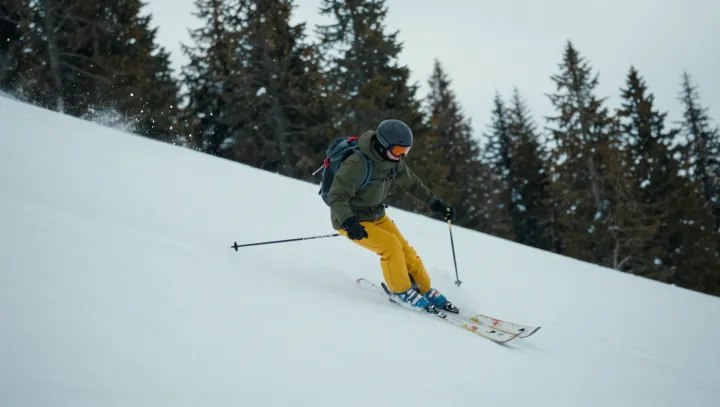
Gravity makes skiing possible, but it does not make the descent effortless. Every turn demands resistance. As skis gather speed, the legs must manage the forces that bend the knees, redirect the body and keep its weight balanced over a surface that is rarely as smooth as it looks.
The real work lies in control. Quadriceps, glutes and calf muscles help maintain a flexed stance, often through isometric contraction, in which muscles generate force without much change in length. On rough snow or during a landing, eccentric contraction helps muscles resist as they lengthen. These demands can leave the thighs burning even when the skier has barely pushed forward. The mountain supplies motion; the body supplies the brakes. Muscle fatigue can also erode precision, making a familiar turn harder to execute.
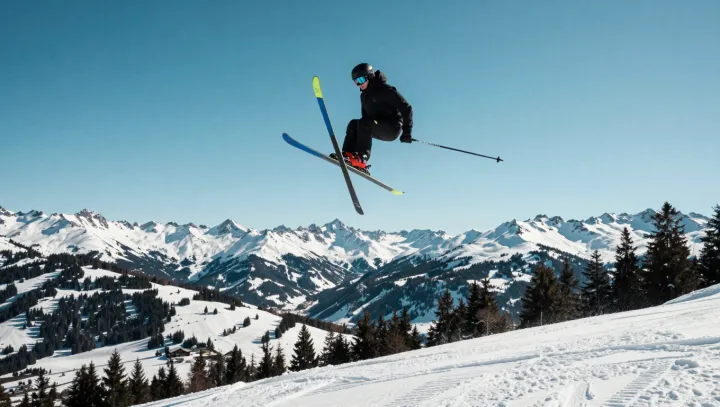
Skiing offers more than a test of endurance. It challenges balance and coordination while providing outdoor exercise, and repeated runs can place meaningful demands on the cardiovascular system. Yet jumps add another layer of risk: takeoff, airborne balance and landing all require skills that a routine descent may not develop. Build strength and technique gradually. Choose terrain that matches your ability, wear a properly fitted helmet, and stop before fatigue compromises control. For a skier paused above the slope, the clean line below is both an invitation and a reminder that every descent must be earned.