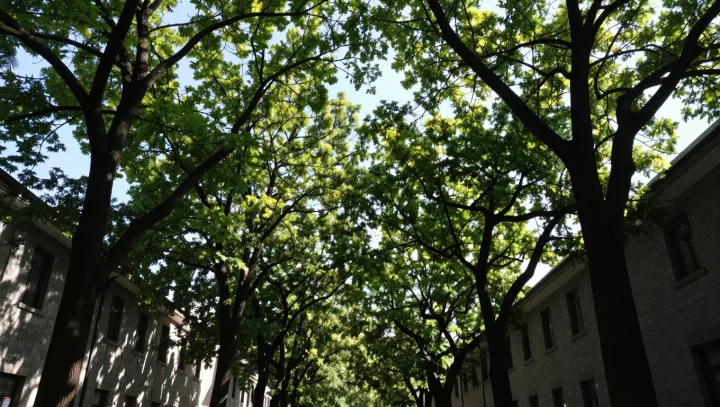
A tree canopy can cool a street more effectively than an artificial shade, even when both intercept the same amount of sunlight. The difference is water. While a roof or awning mainly blocks radiation, leaves also release water vapor, drawing heat from their surroundings as that water evaporates.
Shade alone misses half the story. Trees pull water from the soil and release it through tiny leaf pores called stomata, a process known as transpiration. Evaporation requires energy. That energy is taken in part from the leaf and surrounding air as latent heat, helping keep leaves cooler than a dry surface exposed to comparable sunlight. An artificial shade, by contrast, can absorb solar energy, warm up and transfer some of that heat to nearby air or radiate it toward the street. Its material and ventilation matter, but it lacks the tree's continuous supply of water.
The advantage is not guaranteed. In dry soil, trees may close their stomata to conserve water, reducing transpiration just when cooling is most needed. Humid air can also slow evaporation, while dense crowns may restrict airflow and trap heat beneath them in some conditions. Species, available water and the shape of the street all matter. A canopy is infrastructure. Its cooling depends on roots and soil as surely as on the leaves overhead, and maintaining that system carries costs that an awning does not. Between the buildings, the shade rests on an unseen reservoir.