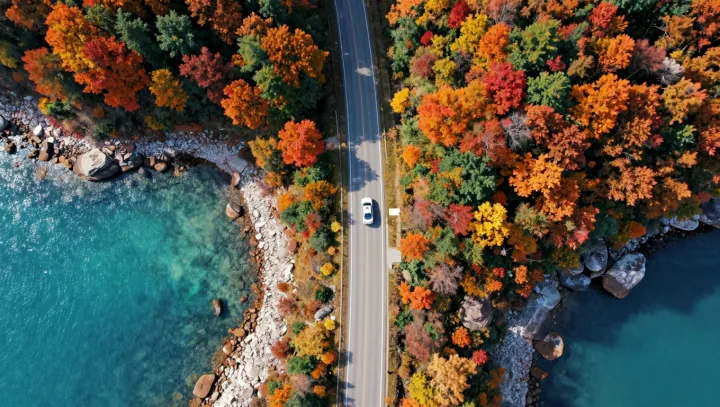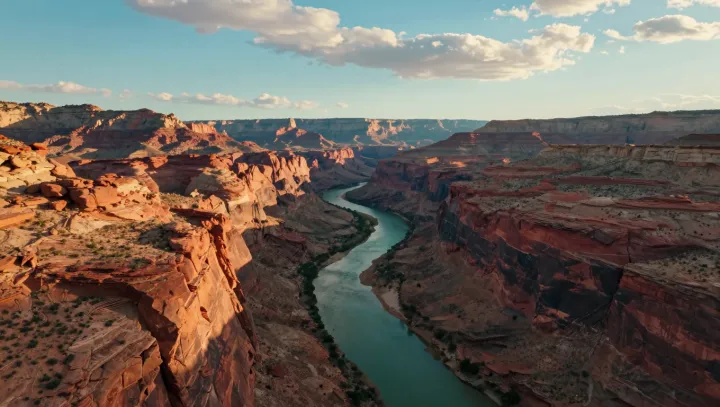
A desert canyon road survives not by strength, but by controlled weakness. Every meter of that black strip wants to grow as the ground temperature jumps more than 30°C, so designers build in places where the structure is allowed to move, crack, and slide without failing under traffic.
The first quiet trick is geometry. Short segments cope better than one rigid slab, so the pavement is cut with transverse joints and sawed grooves that act as sacrificial seams. Through these gaps, thermal expansion and contraction are absorbed before they turn into random fissures under your tires. Punchy idea. The road is meant to break there, not elsewhere.
Material choice matters even more in this canyon laboratory. The asphalt binder is blended and graded so its viscoelastic behavior stays within the Superpave performance envelope across a wide temperature band, resisting rutting when the surface bakes yet avoiding brittle fracture when it cools. Aggregate gradation and air void content are tuned so the mix can deform slightly under thermal strain, then rebound without shedding stones or bleeding.
Below the surface, the real insurance sits unseen. A layered subgrade and base course, built with compacted granular material and sometimes a geotextile separator, decouple the asphalt from the raw canyon floor, limiting differential movement as the rock mass heats and cools. Drainage channels and lateral slopes keep water from pooling and magnifying thermal stress cycles. In the quiet hum of rubber on asphalt, what you feel as smoothness is really a controlled, daily act of mechanical forgiveness.