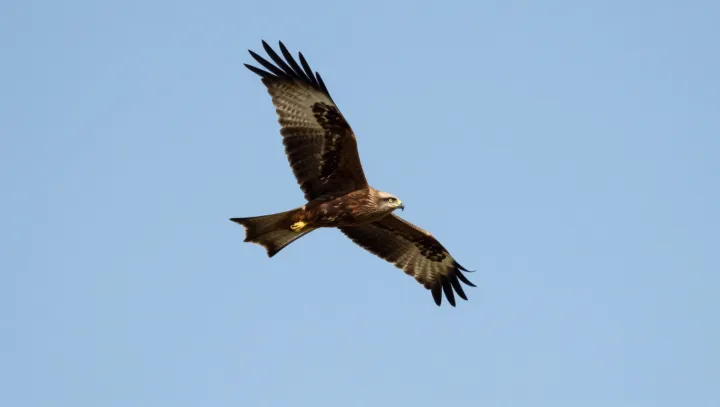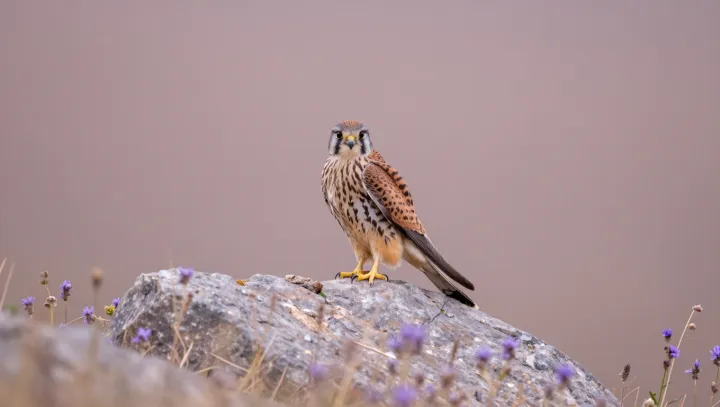
The kestrel's hunting advantage begins with an unlikely act of stillness. As its wings beat and its body shifts in unsettled air, the bird keeps its head comparatively steady, holding its view of the ground long enough to detect a mouse or another small animal. Only then does the hover become a strike.
The trick is less rigid than it looks. Sensors in the vestibular system detect changes in head motion, while visual information helps the bird track movement across its field of view. These signals guide compensating movements of the neck, allowing the head to counter some of the body's pitching and swaying. The vestibulocollic reflex is part of that control system: it links vestibular input to neck muscles. The correction is continuous, not perfect. A kestrel must also adjust its wings and tail against changing air currents, and its head can still move as it scans or follows a target.
A steady gaze is a better search tool. When the image of the ground slides rapidly across the retina, fine detail becomes harder to resolve; reducing that motion helps preserve the visual information needed to distinguish prey from grass, soil and other distractions. Sharp eyesight matters, but sharpness alone cannot cancel the blur caused by an unstable viewpoint. Once the kestrel has located a target, it can leave its hover and swoop, using further visual adjustments as the distance closes. Above the field, motion makes the stillness possible.