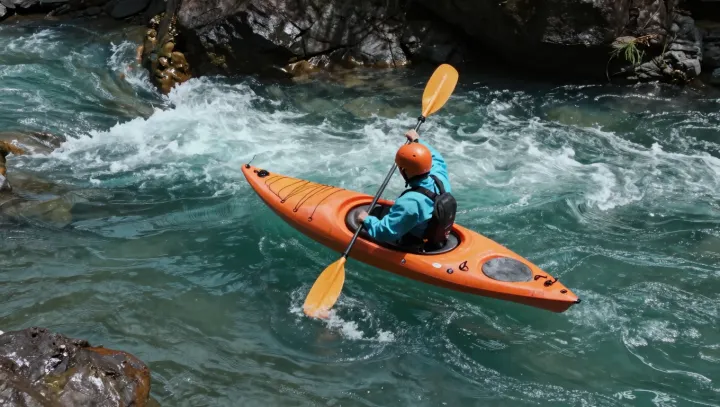
An overturned kayak need not mean an exit. The roll makes that clear. Beneath the turquoise surface, a paddler can use a double-bladed paddle and a coordinated turn of the lower body to bring the boat upright, remaining seated throughout. It is less a feat of strength than a lesson in leverage.
The paddle is support, not a crane. In a common sweep roll, the paddler moves a blade across the surface while rotating the hips and knees to turn the hull upright. Hydrodynamic lift and drag on the moving blade provide temporary support; buoyancy helps the hull return toward the surface. The head rises last, because lifting it too early can pull the boat back over. Timing matters more than force. Boat design, paddle position and the paddler's movement all affect how readily the roll works.
Confidence, however, is no substitute for an exit plan. A roll can fail in rough water, cold conditions or after a collision, so beginners should learn with a qualified instructor in a controlled setting and practice exiting the boat before attempting rolls. A properly fitted buoyancy aid and suitable protective equipment matter on any outing. The reward is composure rather than invincibility. Above the water, the paddle catches the light; below it lies a skill built on knowing when to let go.