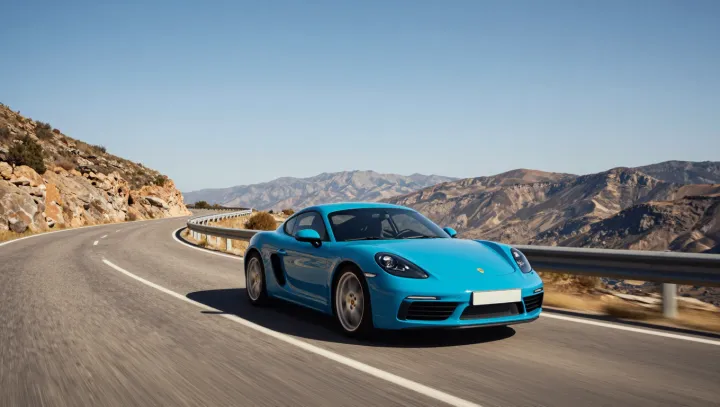
The Cayman's agility carries a price. Its engine sits behind the seats but ahead of the rear axle, concentrating substantial mass near the center of the car. On a winding mountain road, that arrangement helps the coupe respond quickly to steering, yet the same readiness to rotate can leave less time to recover if the rear tires lose grip.
The key is yaw inertia. A car resists rotation around its vertical axis according to how its mass is distributed; with more mass close to that axis, less turning force is needed to change its direction. The effect works both ways. Once a slide begins, the car can also rotate quickly, so a driver may have less time to recognize the slide and respond. Tires, suspension setup, speed and road conditions matter too; the engine position alone does not determine the outcome.
Rear grip has limits. During cornering, tires share their available traction between turning, braking and acceleration. Abruptly lifting off the accelerator or braking in a bend shifts load forward, potentially reducing rear tire grip and provoking oversteer. The rearward weight distribution can help traction under acceleration, but it does not grant immunity from a slide. Stability control can intervene, though it cannot create grip where the road offers too little. On a public mountain road, the sensible margin lies in a restrained speed and smooth inputs, not in testing how quickly a slide can be caught.