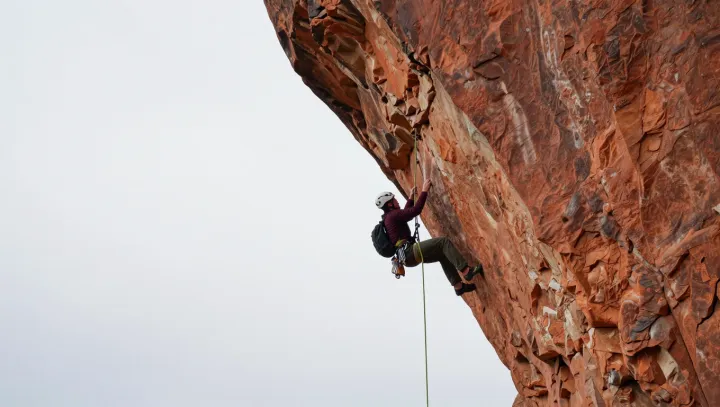
An overhang punishes brute strength sooner than it rewards it. Beneath the steep rock, where gravity threatens to peel the body away, progress depends less on pulling harder than on placing feet precisely and keeping the hips close enough to reduce the strain on the arms. The legs must earn their place.
Footwork is the better bargain. Pressing through a foothold transfers some weight from the arms to the legs, while friction between shoe and rock helps the foot stay put. On suitable holds, a toe hook pulls against the rock with the top of the shoe; a heel hook uses the back of the foot to draw the body inward. Neither works everywhere. Climbers choose holds according to their shape and direction, then turn a hip toward the wall to bring their center of mass closer to the rock. That position can reduce the torque pulling them away, leaving the arms less burdened as they reach.
Stillness, not speed, often buys the next move. Straight arms can let the skeleton bear more of the load than continuously bent elbows, while deliberate foot changes help prevent a swing that would demand another hard pull. If a foot slips, the body can pendulum away from the wall; controlled tension through the legs and torso helps limit that motion. A rope, harness and belay system protect against falls on roped climbs, but they do not replace sound movement or trained supervision. Under the roof, the eye sees a feat of strength; the quiet work is in the feet.