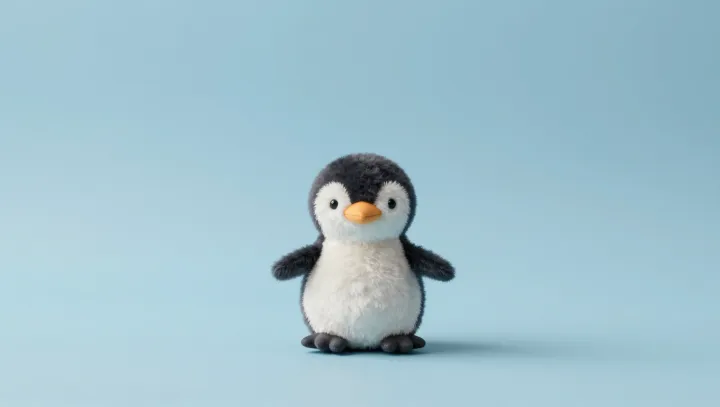
A blank-faced plush penguin has no right to feel this disarming, yet it does. Its power starts with proportion: an oversized head and torso, packed into a shortened body, exaggerate the baby schema described in ethology, stretching eye zone and cheek area so they dominate your visual field and bias the amygdala toward care, not threat.
The next trick is symmetry, and it is almost militant. When the beak, flippers, and belly patch line up along a clean midline, visual cortex circuits for pattern recognition encounter no conflict, which lowers cognitive load and lets affective appraisal race ahead. Tiny deviations would read as injury or disease through evolved error-detection, but tight bilateral symmetry signals health and stability, inviting approach.
Texture finishes the quiet ambush. Ultra-soft fibers, often engineered with microdenier polyester, recruit mechanoreceptors like Merkel cells and C-tactile afferents that are tuned to gentle, slow touch, the same neurophysiology activated by grooming between parent and infant. Because the surface is uniform and low-detail, your brain fills the expressive gap, projecting mood onto a nearly featureless face. The penguin does almost nothing. Your attachment circuitry does the rest.
On a shelf full of louder characters, that still, simplified bird sits like a test pattern for tenderness, waiting to see who reaches first.