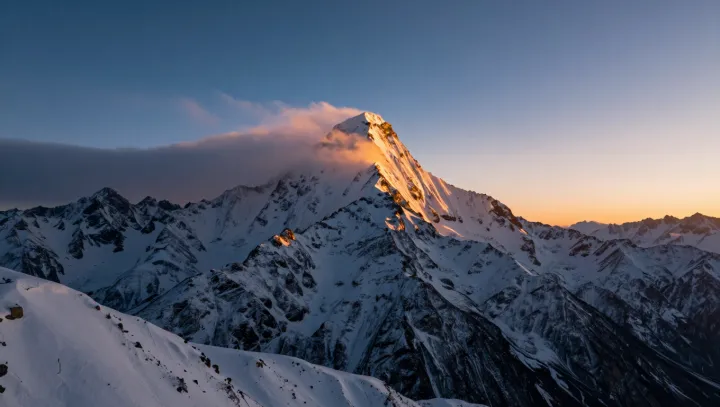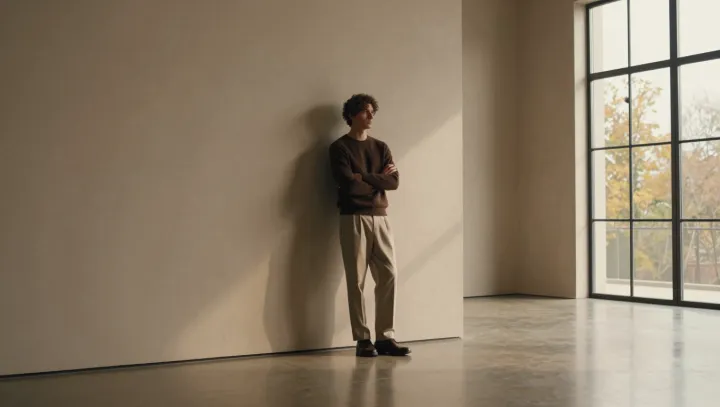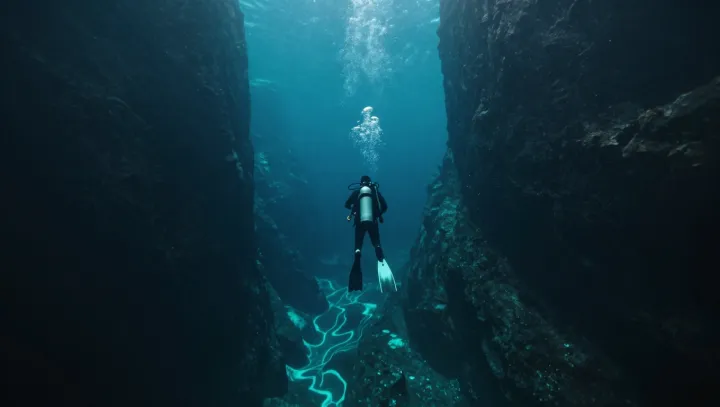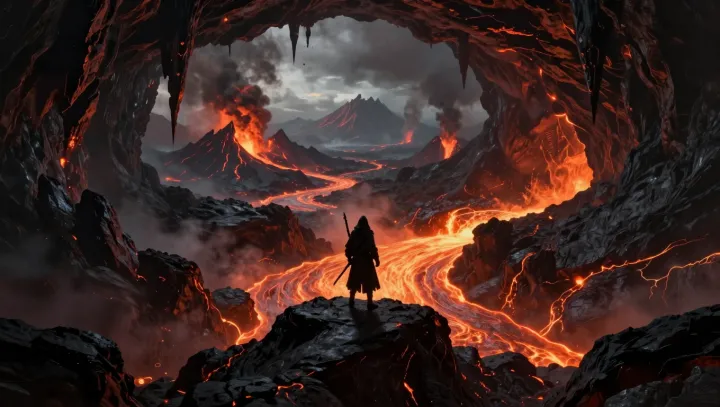
Blinding lava should swallow a cloaked silhouette; if it does not, composition is doing the heavy lifting. The first trick is scale hierarchy, the quiet tyrant of clarity, because the eye defaults to the largest simple shape when visual field entropy spikes. Directors stretch the figure’s vertical span against a wider, noisier lava bed, then strip nearby objects to smaller, fractured scales, so even violent particle systems cannot compete with that single, dominant block of mass.
The second trick is contour contrast, a brutally binary idea. Edges win. Radiant magma and dark rock create high spatial frequency clutter, so artists carve a clean luminance step around the cloak, often using rim light and occlusion to maintain a hard value jump across just a few pixels. That sharp signal rides on familiar Gestalt principles of figure–ground segregation, letting the brain lock onto the outline even when textures blur in motion blur or depth of field.
The third move is light continuity, which is less romantic than it sounds and more like a control system. Once a key side of the silhouette is assigned as the main value anchor, exposure, emissive intensity, and global illumination bounces are tuned so that this relationship barely shifts from shot to shot. Animators then pose so limbs break the body shape, never the value logic, producing a silhouette that can be dissected frame by frame and copied without guessing where the form lives.