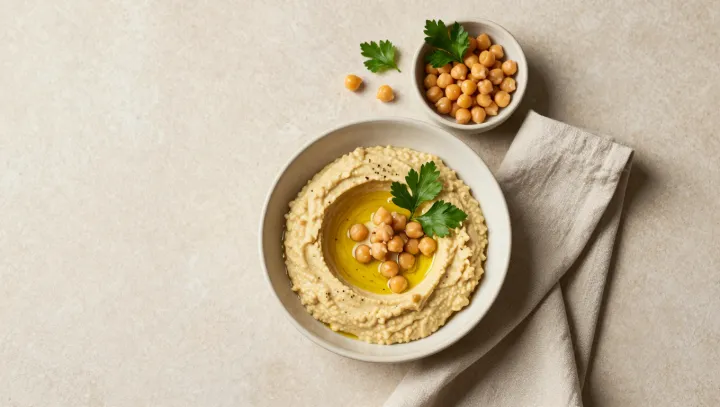
A modest bowl of hummus is a better long-haul snack than many glossy bars on the shelf. That claim runs against the marketing, yet human physiology is blunt about why it holds. Chickpeas bring resistant starch and soluble fiber, both of which swell with water and slow gastric emptying, so food leaves the stomach at a measured pace instead of in a rush.
More powerful than its calories is hummus’s macro mix. Fiber from chickpeas, fat from tahini and olive oil, and plant protein act like a three-lock system on digestion, delaying carbohydrate absorption and smoothing the post-meal glucose curve, a process indexed in studies by lower glycemic response and reduced subsequent energy intake.
Snack bars often chase quick stimulation, not staying power. Many rely on refined sugars and rapidly digested starches that trigger a sharp spike in blood glucose and a matching insulin surge, a pattern linked in appetite research to faster return of hunger and higher total caloric intake across the day. Hummus, by contrast, behaves more like a slow-release fuel, extending satiety signals from gut hormones such as peptide YY and cholecystokinin, and quietly stretching the hours before you start looking for your next fix.