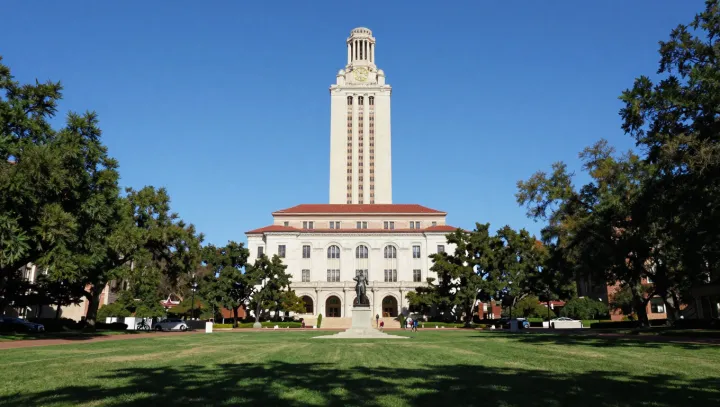
The giant number one is no ordinary victory signal. When it appears in the windows of the University of Texas at Austin Tower, the university is marking a national championship won by a Longhorns team. The distinction matters: not every win, however loudly celebrated, earns that display.
The Tower's lighting makes a hierarchy visible. Orange illumination can mark university celebrations and athletic victories, but the numeral is reserved for the highest achievement in college competition. Window lights form the figure against the orange exterior, turning the Main Building's Tower into a scoreboard visible well beyond the playing field. It is a form of typography made from architecture: the building supplies the grid, and selected windows supply the strokes.
The standard is deliberately demanding. A conference title or a strong season may bring celebration, but a team must win a national championship to earn the number one. That scarcity gives the display its force, because its meaning depends on the many victories that do not qualify. For students and alumni, the illuminated figure connects an achievement on a court, field or other competitive venue to a place shared across the university. Then the lights go dark, and the windows become windows again.